Welcome to Nug's Auto Haus

A well-maintained braking system helps drivers respond effectively to changing road conditions and unexpected hazards. As your vehicle accumulates kilometers, regular use can gradually affect brake component condition, making timely inspections important for maintaining reliable stopping performance. Recognising the early warning signs can help you identify problems before they become more serious. If you notice changes in how your vehicle brakes, Brake Service Brendale from Nugs Auto Haus can help identify the cause and determine the appropriate repairs.
Brake problems do not always develop suddenly. Some begin with a small change in sound, pedal response or vehicle movement. These symptoms can indicate wear, overheating, hydraulic faults or uneven braking.
Ignoring these changes may allow a minor fault to develop into a more serious safety concern. Understanding what your vehicle is telling you can help you decide when to arrange an inspection.
A high-pitched squeal when applying the brakes can indicate worn brake pads, although dust, moisture or other factors may also cause noise. Persistent squealing deserves attention, particularly if it occurs regularly during normal driving.
Grinding sounds are more concerning because they may indicate that brake pad material has worn away and metal components are making contact. This can damage the brake rotors and increase repair requirements.
If grinding continues when you brake, arrange an inspection promptly and avoid driving the vehicle if braking performance is affected.
A brake pedal that feels unusually soft or travels farther than normal can indicate a problem with the hydraulic braking system. Possible causes include air in the brake lines, low brake fluid or a fluid leak.
Do not assume that a soft pedal is simply caused by ageing components. If the pedal suddenly becomes spongy or approaches the floor, stop driving when it is safe to do so and arrange professional assistance.
If your car moves towards the left or right when you apply the brakes, braking force may not be distributed evenly between the wheels.
Possible causes include a sticking brake caliper, uneven brake component wear or a problem affecting one side of the braking system. Tyre and suspension issues can also influence vehicle direction, so the underlying cause needs to be identified rather than guessed.
A proper inspection can help determine whether the concern originates in the brakes or another vehicle system.
Vibration through the steering wheel or brake pedal during braking may indicate uneven brake rotor surfaces or other problems affecting the wheel and braking assembly.
The vibration may be more noticeable when slowing down from higher speeds. Its intensity and location can help a technician narrow down the possible cause.
Do not rely on vibration alone to diagnose the fault. A mechanic should inspect the relevant components and determine whether resurfacing, replacement or another repair is appropriate.
If your vehicle requires more distance than usual to stop, its braking system may not be performing as expected. Worn pads, damaged rotors, contaminated components or hydraulic problems can affect braking effectiveness.
Tyre condition and road surfaces can also influence stopping distance, so the complete situation needs consideration.
A noticeable reduction in braking performance should never be ignored. Increase your distance from other vehicles, avoid unnecessary journeys and arrange an urgent inspection. If the brakes cannot stop the vehicle safely, do not continue driving; seek roadside assistance.
A brake warning light can indicate several issues, depending on the vehicle. These may include an engaged parking brake, low brake fluid or a fault within the braking system.
First, check whether the parking brake has been fully released. If the warning remains illuminated, consult your vehicle manual and arrange an inspection.
If a red brake warning light stays on while driving, particularly alongside a soft pedal, fluid loss or reduced braking performance, pull over safely and seek professional assistance. Do not assume the warning is harmless simply because the car still moves normally.
A sharp, burning smell after braking may indicate excessive heat around the braking components. This can happen during prolonged downhill driving or repeated heavy braking, but a sticking brake caliper can also cause a wheel to overheat.
If the smell persists, smoke appears or one wheel seems unusually hot, stop in a safe location and allow the vehicle to be assessed. Never touch a hot wheel or brake component to check its temperature.
Repeated overheating can damage brake parts and reduce braking effectiveness, making the cause important to identify.
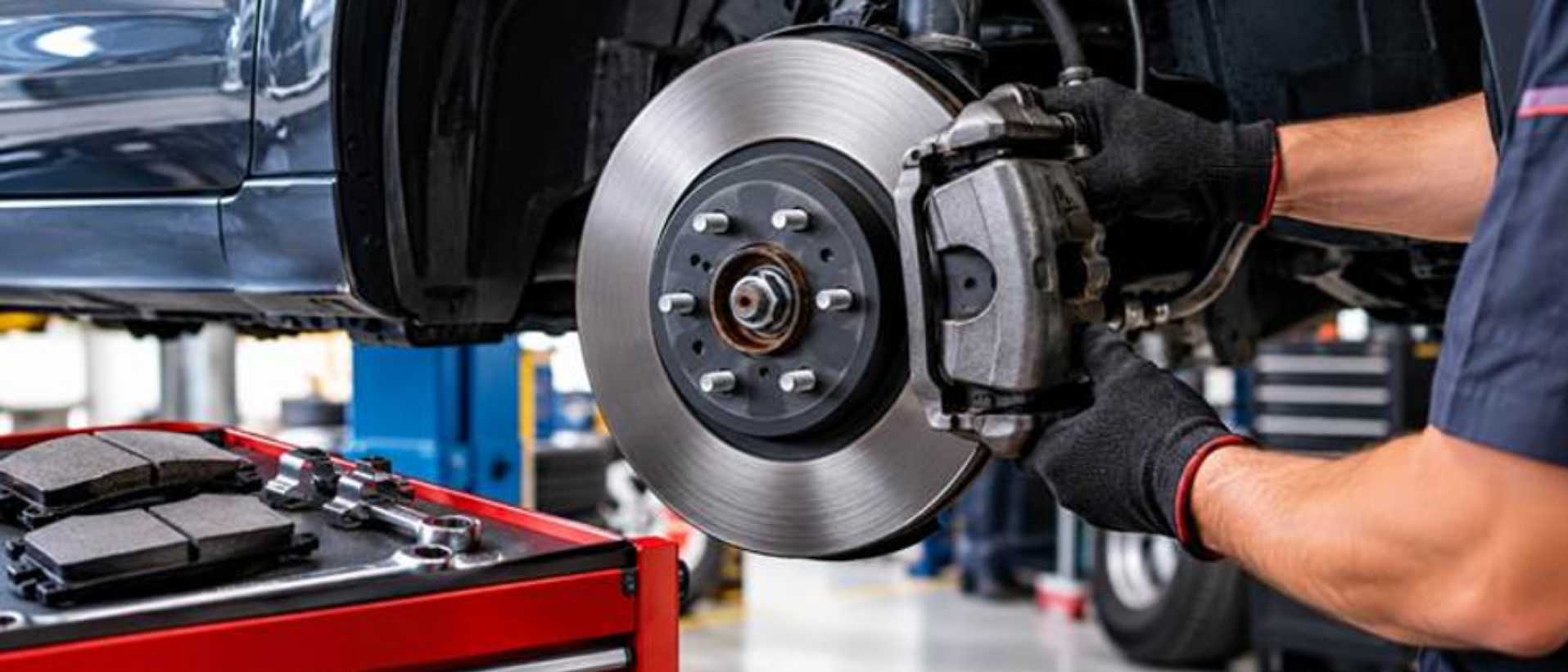
A professional brake inspection assesses the condition of your vehicle’s braking components to determine whether they are operating correctly. Nugs Auto Haus checks components such as brake pads, rotors, calipers and hydraulic systems to identify wear, damage or faults that may affect stopping performance.
The recommended repairs depend on the inspection results. Worn pads may require replacement, while damaged rotors, sticking calipers or hydraulic issues may need separate attention. Identifying the underlying cause helps ensure that the appropriate repair is carried out.
As discussed in our previous blog, “Why Professional Suspension Repair Service Matters for Brendale Drivers,” suspension condition plays an important role in vehicle stability, handling and tyre contact with the road. Similarly, the braking system must work effectively alongside other vehicle components to support controlled driving. Checking these systems when concerns arise can help identify problems that may affect overall vehicle safety.
Do not wait for your next scheduled service if you notice a new noise, unusual pedal response, dashboard warning or change in stopping performance.
Routine vehicle maintenance can also provide an opportunity to check brake condition and identify wear. However, an inspection interval cannot replace prompt attention when symptoms appear.
For drivers seeking Brake Service Brendale, Nugs Auto Haus offers brake inspections, maintenance and repairs to help address braking concerns. The workshop can assess the symptoms and recommend suitable work based on the condition of your vehicle.
Your brakes should respond predictably whenever you need to slow down or stop. Changes in sound, pedal feel, steering behaviour or stopping ability can provide important clues that something needs attention.
Recognising these seven warning signs can help you respond before a fault becomes more serious. If your brakes are making unusual noises, producing vibration or failing to respond normally, contact Nugs Auto Haus to arrange an inspection.
Brake pads have a minimum thickness specified by the manufacturer. A mechanic can measure the remaining friction material and check its condition to determine whether replacement is necessary.
Pay attention to when the noise occurs and whether it changes when you apply the brakes. Persistent grinding, unusual braking behaviour or a sudden change in stopping ability may indicate a serious fault. Stop driving if the vehicle cannot brake safely and arrange a professional inspection.
Possible causes include air in the hydraulic system, low brake fluid or a fluid leak. Because these problems can affect stopping ability, a suddenly soft pedal should be treated as a safety concern.
No. Replacement depends on the condition, thickness and specifications of each component. A technician should inspect both before recommending the required work.
You can contact Nugs Auto Haus to discuss your vehicle's symptoms and arrange a brake inspection or repair. Call (07) 2000 0987 for enquiries.